

Table of Contents
You’re Not the Only One Wondering What Happened
You know that moment when you catch yourself in the mirror and wonder when everything started feeling… different?
Maybe it’s the hesitation before initiating intimacy. Or the nagging worry about whether you’ll perform the way you used to. Perhaps it’s that quiet voice asking if your partner has noticed the changes too.
Here’s what nobody talks about: sexual vitality isn’t just about what happens in the bedroom. It’s about how you feel about yourself as a man.
When your sexual confidence wavers, it ripples through everything. Your energy at work. Your presence in social situations. The way you carry yourself through your day.
But here’s the thing—you’re not broken, and this isn’t inevitable.
What you’re experiencing isn’t a character flaw or an unavoidable consequence of getting older. It’s your body and mind responding to changes that, once you understand them, you can absolutely influence.
The question isn’t whether you can reclaim your sexual vitality. The question is: are you ready to stop accepting “good enough” and start building something better?
What Sexual Vitality Really Means (Beyond Just Performance)
Most guys think sexual vitality is about lasting longer or getting harder erections.
That’s like saying a great car is just about top speed.
Real sexual vitality is the integration of four critical systems:
- Physical capacity – your body’s ability to perform
- Mental confidence – your psychological readiness and presence
- Emotional connection – your ability to be intimate and vulnerable
- Energetic drive – your actual desire and motivation
The Four Pillars of Male Sexual Vitality
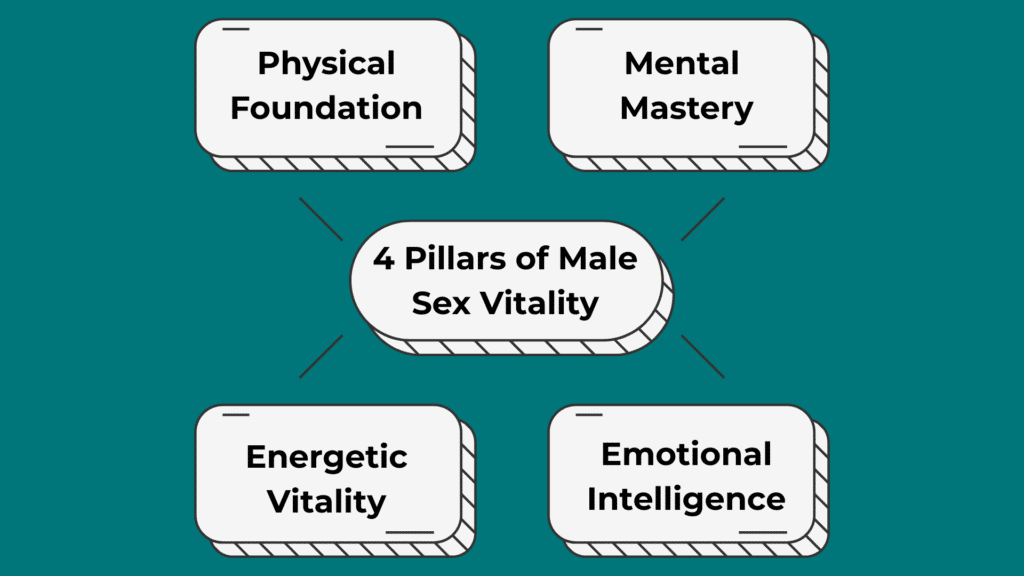
Think of these as the legs of a chair. Remove one, and the whole thing becomes unstable.
Pillar 1: Physical Foundation Your cardiovascular health, hormone balance, and nervous system function. Research shows that erectile function is often an early indicator of overall cardiovascular health.
Pillar 2: Mental Mastery Your confidence, focus, and ability to stay present rather than getting lost in performance anxiety or distraction.
Pillar 3: Emotional Intelligence Your capacity for intimacy, communication, and vulnerability with your partner.
Pillar 4: Energetic Vitality Your actual desire, motivation, and life force energy that drives sexual interest.
Why Most Men Focus on the Wrong Things
Here’s where most guys go wrong: they try to fix the symptom instead of building the system.
Common mistakes:
- Focusing only on physical performance
- Ignoring the mental/emotional components
- Looking for quick fixes instead of sustainable solutions
- Treating sexual health as separate from overall health
- Avoiding the conversation entirely
The reality? True sexual vitality is built, not bought. It’s a practice, not a pill.
The Mind-Body Connection You Can’t Ignore
Your brain is your most important sexual organ. Full stop.
Before blood flows anywhere, before hormones surge, before anything physical happens—your mind sets the stage for everything that follows.
How Your Brain Controls Everything That Happens
Sexual arousal starts in your brain and travels through your nervous system to coordinate incredibly complex physiological responses.
Here’s what happens in the first few seconds:
- Your brain processes sexual stimuli (visual, emotional, physical)
- The parasympathetic nervous system activates (rest and digest mode)
- Blood flow redirects to sexual organs
- Hormone cascades begin (testosterone, dopamine, oxytocin)
- Muscle tension patterns change throughout your body
But here’s the problem: stress, anxiety, and mental distraction can hijack this entire process.
The Confidence Spiral—Up or Down
Sexual confidence works like a feedback loop. Good experiences build confidence, which leads to better experiences. Challenging experiences create doubt, which can spiral into performance anxiety.
Signs you’re in a downward confidence spiral:
- Overthinking during intimate moments
- Focusing more on performance than pleasure
- Avoiding initiation to prevent disappointment
- Feeling disconnected from your body during sex
- Racing thoughts about what your partner is thinking
The upward spiral looks like:
- Present-moment awareness during intimacy
- Focus on sensation and connection
- Natural confidence in your abilities
- Communication that enhances rather than threatens
- Trust in your body’s responses
Want to understand how to shift from anxiety to confidence? [ Sex Starts in the Mind: How Confidence, Beliefs, and Stress Shape Performance]
Lasting Power and Stamina: What Actually Matters
Let’s address the elephant in the room: most men worry about lasting longer.
But here’s what the research actually shows: duration isn’t what matters most to sexual satisfaction. Studies indicate that factors like emotional connection, communication, and overall intimacy quality rank much higher than duration alone.
The Real Science Behind Endurance
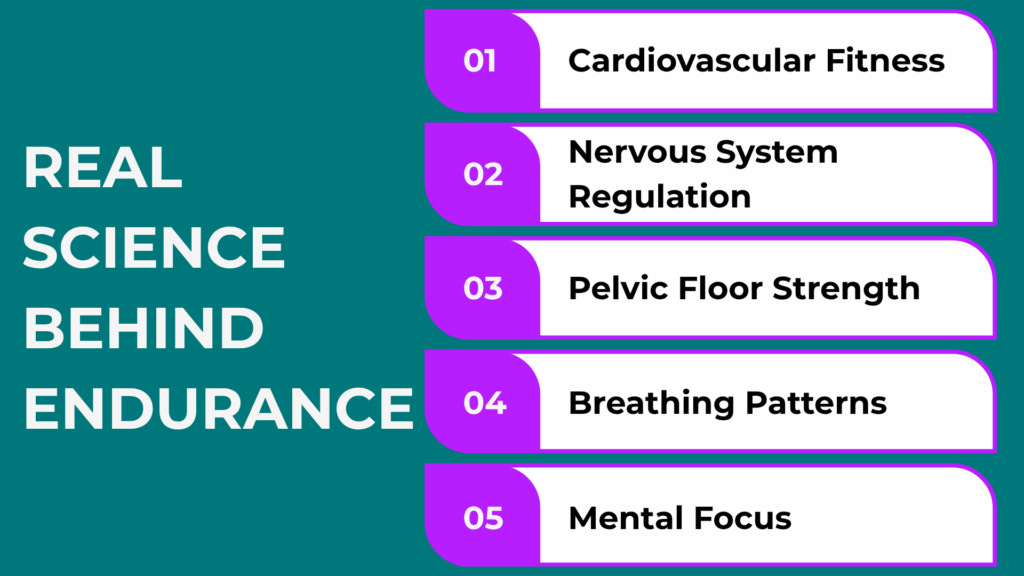
Sexual stamina isn’t just about penis control. It’s about:
Cardiovascular Fitness Sex is physical activity. Better cardio means better blood flow and more sustained energy.
Nervous System Regulation Your ability to stay relaxed and present rather than tense and rushed.
Pelvic Floor Strength These muscles support sexual function and can be trained like any other muscle group.
Breathing Patterns Deep, rhythmic breathing supports arousal regulation and presence.
Mental Focus The ability to direct attention toward pleasure rather than performance metrics.
Why Quick Fixes Don’t Work Long-Term
Those delay sprays, special condoms, and “last longer” pills? They might provide temporary relief, but they don’t address the underlying factors that create sustainable sexual confidence.
Problems with quick fixes:
- They don’t build actual capacity
- They can reduce sensation and connection
- They reinforce the idea that you need external help
- They don’t address the mental/emotional components
- They can create dependency rather than confidence
The sustainable approach focuses on:
- Building actual physical capacity
- Developing mental skills and presence
- Improving overall health and energy
- Strengthening emotional connection with your partner
Ready to build real endurance capacity? [Bedroom Endurance for Men: What Really Impacts Staying Power (and How to Improve It)]
Desire and Drive: Understanding What Fuels You
This might be the most misunderstood aspect of male sexuality.
Most guys think desire is just about testosterone levels. But the reality is far more complex and interesting.
The Testosterone Truth Nobody Talks About
Yes, testosterone matters. But it’s not the whole story.
What we know about testosterone and desire:
- Normal testosterone levels vary dramatically between men (healthy men 19-39 years: 264-916 ng/dL)
- Many men with “low normal” testosterone have healthy sex drives
- Testosterone peaks and valleys change throughout the day and with age
- Lifestyle factors significantly impact testosterone production
- Psychological factors can override hormonal influences
But here’s the kicker: obsessing over testosterone numbers can actually reduce sexual confidence and desire.
Beyond Hormones—What Really Drives Want
Sexual desire is influenced by a complex interaction of factors:
Biological Factors:
- Hormone levels (testosterone, dopamine, oxytocin)
- Overall energy and health status
- Sleep quality and stress levels
- Cardiovascular and nervous system health
Psychological Factors:
- Stress and mental load
- Body image and self-confidence
- Past sexual experiences
- Relationship satisfaction
Environmental Factors:
- Life circumstances and pressures
- Novelty and variety in intimate life
- Communication patterns with partner
- Work stress and time pressures
The bottom line: true sexual desire comes from feeling vital, confident, and connected—not just from optimal hormone levels.
Want to understand what’s really driving your desire? [What Drives Desire in Men: The Real Factors Behind Libido, Motivation, and Wanting]
Erection Health: The Foundation That Everything Builds On
Let’s talk about erections honestly.
For most men, erection quality is the most visible and immediate indicator of sexual health. When erections are strong and reliable, confidence follows. When they’re not, everything else can feel uncertain.
Blood Flow, Brain Signals, and System Integration
An erection isn’t just about blood flow—though that’s crucial. It’s about the coordination of multiple body systems working in harmony.
The erection process involves:
- Brain processing and sexual arousal
- Nervous system signaling to the penis
- Blood vessel dilation and increased flow
- Muscle relaxation in penile tissues
- Hormonal support for the entire process
Here’s what this means: erection problems are often early warning signs of cardiovascular, nervous system, or hormonal issues that extend far beyond sexual function.
Warning Signs Most Men Ignore
Early indicators that deserve attention:
- Gradual decrease in morning erections
- Erections that are less firm than they used to be
- Difficulty maintaining erections during partnered sex
- Need for more stimulation to achieve erection
- Decreased spontaneous erections throughout the day
These changes often happen gradually, which is why many men adapt rather than address them. But early intervention is almost always more effective than waiting until problems become severe.
Physical factors that impact erection health:
- Cardiovascular fitness and blood flow
- Blood pressure and vessel health
- Blood sugar regulation
- Sleep quality and recovery
- Stress and cortisol levels
- Body weight and inflammation
Want to understand the complete picture of erection health? [Erection Health Explained: Blood Flow, Brain Signals, and the Systems Behind Performance]
Connection and Intimacy: Why Your Relationship Affects Everything
Here’s something most men don’t want to hear: your relationship dynamics directly impact your sexual vitality.
Not because your partner controls your sexuality, but because sexual expression happens in the context of connection, communication, and emotional safety.
The Pressure Trap Most Couples Fall Into
When sexual challenges arise, couples often create pressure cycles that make everything worse.
The typical pattern:
- Man experiences some sexual difficulty
- Both partners become focused on the “problem”
- Performance pressure increases
- Natural sexual flow gets replaced by evaluation and worry
- Sexual frequency and satisfaction decrease
- Emotional distance grows
- Sexual challenges worsen
Breaking this cycle requires:
- Honest communication about feelings and fears
- Taking pressure off performance and focusing on connection
- Exploring intimacy beyond penetrative sex
- Building emotional safety and vulnerability
- Working together rather than avoiding the topic
Communication That Actually Helps
Most couples avoid talking about sexual challenges because they don’t know how to discuss them constructively.
Effective sexual communication includes:
- Expressing your feelings without blaming your partner
- Asking for what you want rather than complaining about what’s missing
- Sharing vulnerabilities and concerns openly
- Celebrating what’s working while addressing what needs attention
- Creating regular check-ins about intimacy and connection
Remember: your partner wants you to feel confident and satisfied too. Most relationship problems around sexuality come from assumptions and miscommunication, not from fundamental incompatibility.
Ready to strengthen the relationship foundation of your sexual vitality? [ Intimacy, Connection, and Sex: Why Emotional Health Shapes Physical Pleasure]
The Lifestyle Factors That Make or Break Sexual Vitality
Sexual vitality doesn’t exist in a vacuum. It’s directly connected to how you live, move, sleep, and manage stress.
Sleep, Stress, and Energy Management
Sleep Quality Impact:
- Testosterone production occurs primarily during deep sleep, with levels peaking during REM sleep episodes
- Sleep deprivation directly reduces libido and sexual performance
- REM sleep supports nervous system recovery crucial for sexual function
- Sleep disorders often correlate with sexual dysfunction
Stress Management:
- Chronic stress elevates cortisol, which suppresses testosterone
- Stress creates mental distraction during intimate moments
- High stress reduces overall life satisfaction and sexual desire
- Stress management techniques directly improve sexual confidence
Energy and Vitality:
- Sexual energy is connected to overall life energy
- Men who feel vital and energetic are more sexually confident
- Fatigue and exhaustion kill sexual desire and performance
- Building overall vitality supports sexual vitality
Exercise That Directly Impacts Performance
Not all exercise is created equal when it comes to sexual health.
Exercises that specifically support sexual vitality:
- Cardiovascular training – improves blood flow and endurance
- Pelvic floor exercises – strengthen muscles involved in sexual function
- Core strengthening – supports sexual positioning and power
- Flexibility work – improves blood flow and movement quality
- Resistance training – supports testosterone production and body confidence
Exercise types to prioritize:
- High-intensity interval training (HIIT) for cardiovascular health
- Kegel exercises for pelvic floor strength
- Yoga or stretching for flexibility and stress reduction
- Weight training for hormone optimization and body composition
Pro tip: consistency matters more than intensity. Regular moderate exercise beats sporadic intense efforts for sexual health benefits.
Building Your Personal Sexual Vitality Plan
Now that you understand the components, let’s build your specific approach.
Assessment—Where Are You Now?
Physical Assessment:
- How’s your cardiovascular health and energy?
- When did you last have comprehensive blood work?
- How’s your sleep quality and stress management?
- Are you dealing with any chronic health issues?
Mental/Emotional Assessment:
- How confident do you feel about your sexual abilities?
- What specific worries or anxieties come up around sex?
- How satisfied are you with emotional intimacy in your relationship?
- What patterns of thinking help or hurt your sexual confidence?
Relational Assessment:
- How satisfied are you and your partner with your sexual connection?
- How well do you communicate about sexual desires and concerns?
- What’s working well in your intimate relationship?
- What areas could use attention or improvement?
Priority Setting—What to Focus on First
If your main concern is physical performance:
- Start with cardiovascular health and blood flow optimization
- Address sleep quality and stress management
- Consider comprehensive hormone and health testing
If your main concern is confidence and mental game:
- Focus on stress reduction and mindfulness practices
- Work on communication skills with your partner
- Address any underlying anxiety or performance pressure
If your main concern is desire and motivation:
- Examine lifestyle factors affecting energy and vitality
- Look at relationship dynamics and emotional connection
- Consider whether depression or stress is impacting libido
If your main concern is relationship dynamics:
- Prioritize communication and emotional intimacy
- Work together with your partner on sexual goals
- Consider couples counseling or sex therapy if needed
When to Seek Professional Help
Consider medical consultation for:
- Significant changes in sexual function
- Cardiovascular concerns or risk factors
- Hormone-related symptoms beyond sexual function
- Chronic health conditions affecting sexual health
Consider therapy or counseling for:
- Performance anxiety that isn’t improving with self-help
- Relationship conflicts around sexuality
- Past trauma affecting sexual expression
- Depression or anxiety impacting sexual desire
Consider specialized help for:
- Couples therapy for sexual communication
- Sex therapy for specific sexual concerns
- Men’s health specialists for comprehensive evaluation
- Urologists for specific erectile or physical concerns
Frequently Asked Questions About Male Sexual Vitality
At what age do men typically notice changes in sexual vitality?
Most men begin noticing subtle changes in their 30s, with more noticeable changes often occurring in their 40s and 50s. However, significant sexual vitality can be maintained well into later decades with proper attention to health, relationships, and lifestyle factors. Age-related changes are often gradual and can be influenced significantly by overall health status.
Can sexual vitality be improved naturally without medication?
Absolutely. Many aspects of sexual vitality respond well to natural approaches including exercise, stress management, sleep optimization, and relationship improvements. While medications can be helpful in specific situations, lifestyle modifications often provide the foundation for lasting sexual health and confidence. The key is addressing root causes rather than just symptoms.
How long does it take to see improvements in sexual performance?
Some improvements can be noticed within weeks, while others may take 2-3 months of consistent effort. Lifestyle changes like improved sleep and stress management often show benefits quickly, while physical conditioning and relationship improvements typically develop over longer periods. Consistency and patience are essential for sustainable results.
What role does stress play in sexual vitality?
Stress is one of the most significant factors affecting male sexual vitality. Chronic stress elevates cortisol levels, which suppress testosterone production and interfere with sexual arousal and performance. Stress also creates mental distraction during intimate moments and reduces overall life satisfaction and sexual desire.
Are testosterone supplements necessary for sexual vitality?
Not necessarily. While testosterone plays a role in sexual function, many men with normal testosterone levels experience sexual challenges, and many with lower levels maintain healthy sexual vitality. Testosterone therapy should only be considered after comprehensive evaluation and when levels are clinically low. Lifestyle factors often have greater impact on sexual vitality than hormone optimization alone.
How important is cardiovascular health for sexual function?
Cardiovascular health is fundamental to sexual function. Erections depend on healthy blood flow, and cardiovascular disease is one of the most common causes of erectile dysfunction. Men who maintain good cardiovascular fitness through exercise and heart-healthy lifestyle choices typically maintain better sexual function throughout their lives.
Bottom line: Sexual vitality isn’t about returning to your 20-year-old self. It’s about building the best version of your current self—physically, mentally, emotionally, and relationally.
This isn’t about perfection. It’s about progression. It’s about feeling confident in your body, connected with your partner, and engaged with your own sexuality in a way that enhances rather than detracts from your life.
Your next steps:
- Choose one area to focus on first based on your assessment
- Start with small, sustainable changes rather than dramatic overhauls
- Communicate with your partner about your goals and concerns
- Track your progress and adjust your approach as needed
- Seek professional help when appropriate
If this resonated with you, remember: every man deserves to feel confident, capable, and connected in his sexual life. The tools and understanding are available. The question is whether you’re ready to prioritize this area of your life and do the work to build something better.
Your sexual vitality is worth the investment. You are worth the investment.
Disclaimer: This content is for informational purposes only and is not a substitute for professional medical advice, diagnosis, or treatment. Always seek the advice of your physician or other qualified health provider with any questions you may have regarding a medical condition.
Read More Topics on Sexual Vitality, Mind & Sexual Confidence


