

Table of Contents
You know that feeling when your phone battery hits 15%?
Everything slows down. Apps take forever to load. The screen dims. You start planning your day around finding the next charging station.
That’s exactly what’s happening inside your body when your cellular energy tanks.
The difference? You can’t just plug yourself into the wall for 30 minutes and get back to 100%.
Or can you?
Here’s what most men don’t realize: that afternoon energy crash, the struggle to get through workouts, the mental fog that makes you feel like you’re operating at half-speed – it’s not just aging. It’s not inevitable.
It’s your mitochondria crying for help.
You Know That 3 PM Energy Crash Isn’t Normal
Let’s be honest about what’s really happening here.
You used to power through 12-hour days without breaking a sweat. Now you’re reaching for your third cup of coffee before lunch, and you still feel like you’re running on fumes.
This isn’t about getting older. This is about your cellular power plants shutting down.
The Real Cost of Running on Empty
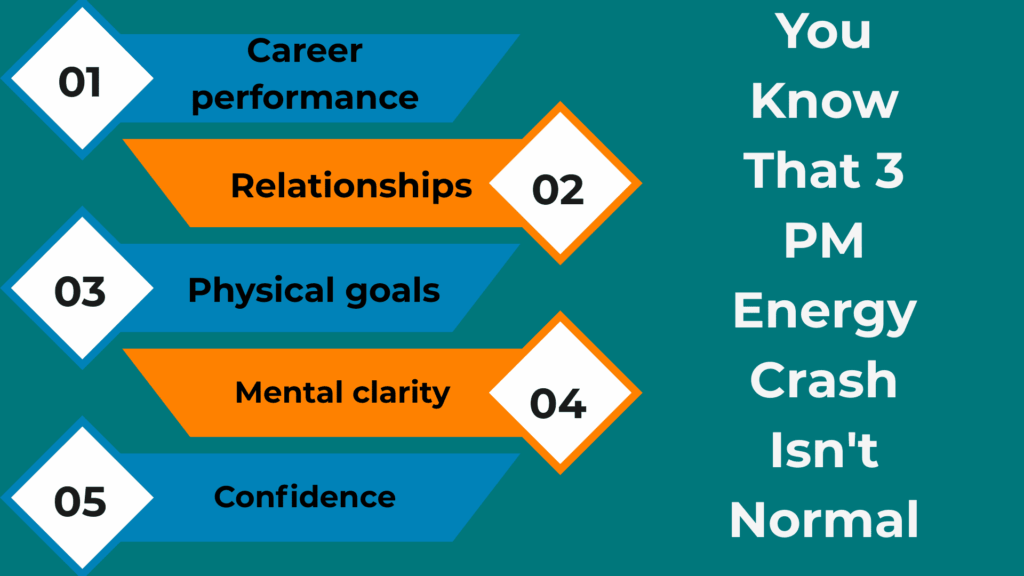
Think about what low energy really costs you:
- Career performance – You’re not bringing your A-game to meetings that matter
- Relationships – You’re too drained to be present with people you care about
- Physical goals – Workouts feel impossible, so you skip them entirely
- Mental clarity – Simple decisions feel overwhelming
- Confidence – You don’t feel like the man you used to be
Here’s the thing: Your body is designed to produce massive amounts of energy. The fact that it’s not tells us something specific is broken.
What’s Really Happening Inside Your Cells
Picture this: Your body has about 37 trillion cells. Each one contains anywhere from a few hundred to several thousand tiny power plants called mitochondria.
These aren’t just parts of your cells. They’re literally the engines that power everything you do.
Every heartbeat. Every thought. Every rep in the gym. Every moment of focus at work.
It all runs on one currency: ATP (adenosine triphosphate).
Your Mitochondria Are Your Body’s Power Plants
Think of ATP like the electricity in your house. You don’t think about it until the power goes out, but it’s running everything behind the scenes.
Your mitochondria are constantly breaking down the food you eat and the oxygen you breathe to create ATP. When this process gets sluggish, everything else follows.
But here’s what’s really happening as you age:
- Mitochondrial efficiency drops by about 10% per decade after 30
- Free radical damage accumulates, making your cellular engines run dirty
- Inflammation interferes with energy production
- Stress literally damages your mitochondria
How ATP Actually Fuels Everything You Do
Every time you need energy for anything – and I mean anything – your body breaks down ATP to release that power.
Need to focus on a complex project? Your brain burns through ATP like a sports car burns through gas.
Want to crush a workout? Your muscles are demanding ATP with every contraction.
Trying to recover from stress? Your entire repair system runs on ATP.
When ATP production slows down, you don’t just feel tired. You feel like a dimmed version of yourself.
Enter Red Light Therapy: Science or Snake Oil?
I know what you’re thinking.
“Light therapy? Really? What’s next, crystal healing?”
I get the skepticism. The wellness world is full of expensive gadgets that promise everything and deliver nothing.
But here’s where red light therapy is different: The science is actually solid.
The Photobiomodulation Process Explained Simply
Red light therapy – technically called photobiomodulation – works by delivering specific wavelengths of light (typically 660-850 nanometers) directly to your cells.
Think of it like this: Remember how plants use sunlight for energy through photosynthesis? Your mitochondria have a similar mechanism.
When the right wavelengths hit your mitochondria, they interact with an enzyme called cytochrome c oxidase. This enzyme is like the ignition switch for your cellular power plants.
What the Research Actually Shows
The studies aren’t coming from supplement companies or device manufacturers. They’re coming from major universities and medical institutions.
Key findings on red light therapy include:
- Increased ATP production by up to 150% in treated cells
- Improved mitochondrial efficiency measured through oxygen consumption
- Enhanced cellular repair and reduced oxidative stress
- Better exercise performance and faster recovery times
But here’s what the research doesn’t show: overnight transformations or miraculous cures.
How Red Light Therapy Boosts ATP Production
Let’s get into the actual mechanism without drowning you in biochemistry jargon.
Your mitochondria contain an enzyme called cytochrome c oxidase. Think of it as the final step in your cellular energy assembly line.
When this enzyme gets hit with the right wavelength of light, it literally becomes more efficient at producing ATP.
The Cytochrome c Oxidase Connection
Here’s what happens at the cellular level:
- Red and near-infrared light penetrates your skin and reaches your mitochondria
- Cytochrome c oxidase absorbs these specific wavelengths
- The enzyme’s efficiency increases, allowing more oxygen to be processed
- More oxygen processed = more ATP produced
- More ATP = more cellular energy for everything your body does
It’s like upgrading the engine in your car. Same fuel, better performance.
More Efficient Energy = Better Performance
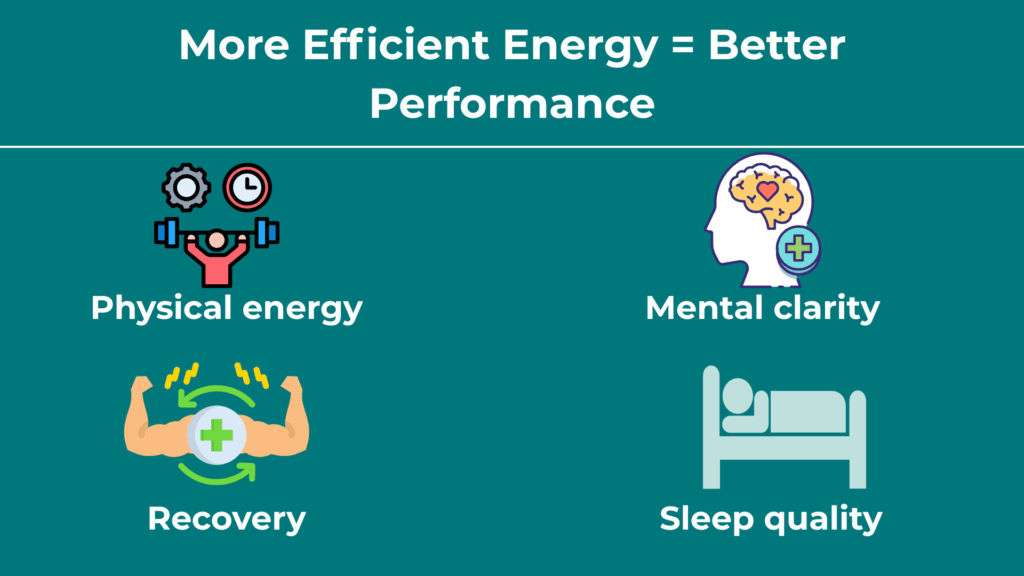
When your mitochondria start producing ATP more efficiently, the effects cascade through everything:
- Physical energy – Workouts feel easier, daily tasks don’t drain you
- Mental clarity – Your brain has the fuel it needs for complex thinking
- Recovery – Your body can actually repair and rebuild effectively
- Sleep quality – Better energy production during the day leads to better rest at night
But here’s the key: This isn’t about adding more energy. It’s about making your existing energy production more efficient.
What You Can Realistically Expect
Let’s cut through the hype and talk about real expectations.
Red light therapy isn’t a magic bullet. It’s not going to turn you into a 25-year-old overnight.
What it can do is help optimize your mitochondrial function so your cells can produce energy more efficiently.
Timeline for Seeing Results
Here’s what most people experience:
- Week 1-2: Subtle improvements in sleep quality and recovery
- Week 3-4: Noticeable increases in sustained energy throughout the day
- Week 6-8: Improved exercise performance and mental clarity
- Month 3+: Cumulative benefits become more pronounced
The key word here is consistency. Sporadic use won’t give you the mitochondrial adaptations you’re looking for.
Who Benefits Most (And Who Doesn’t)
Red light therapy tends to work best for men who:
- Are dealing with age-related energy decline (35+)
- Have demanding physical or mental jobs
- Exercise regularly but struggle with recovery
- Have optimized the basics (sleep, nutrition, stress) but still feel subpar
It’s less effective for:
- Men with serious underlying health conditions (get those addressed first)
- Anyone expecting instant results without lifestyle changes – especially those who are older
- People who haven’t addressed fundamental energy drains (poor sleep, chronic stress, terrible nutrition)
The Bottom Line: Is Red Light Therapy Worth It?
Here’s my honest take: Red light therapy is one of the few “biohacking” interventions that actually has solid science behind it.
But it’s not cheap, and it’s not magic.
Cost vs. Benefit Analysis
Quality red light therapy devices typically run $200-$800 for home units, or $50-$100 per session at clinics.
Compare that to:
- The cost of constantly feeling tired and underperforming
- Expensive supplements that may or may not work
- The long-term health costs of mitochondrial dysfunction
For many men, the math works out. Especially if you’re already optimizing everything else and looking for that extra edge.
What to Look for in Treatment Options
If you decide to try red light therapy, here’s what matters:
- Wavelength: Look for devices offering 660nm (red) and 850nm (near-infrared)
- Power density: Minimum 50mW/cm² for effective treatment
- Treatment area: Larger panels treat more of your body simultaneously
- FDA clearance: Ensures the device meets safety standards
Pro tip: Start with professional treatments to see how you respond before investing in home equipment.
Ready to Power Up Your Cellular Energy?
Look, you don’t have to accept declining energy as inevitable.
Your mitochondria are designed to power you through decades of high performance. Red light therapy might be the tool that helps them do their job more effectively.
Here’s what I’d recommend:
- Start with the basics – Optimize sleep, nutrition, and stress management first
- Try professional treatments – 8-10 sessions to gauge your response
- Track objective measures – Energy levels, workout performance, sleep quality
- Consider home devices if you see consistent benefits
The goal isn’t to become superhuman. It’s to feel like yourself again – energized, focused, and ready to tackle whatever life throws at you.
Remember: Your energy is your most valuable resource. Everything else in your life depends on it.
What’s that worth to you?
Frequently Asked Questions About Red Light Therapy and ATP
Q: How long does it take to see energy improvements from red light therapy?
Most men notice subtle improvements in sleep and recovery within 1-2 weeks, with more significant energy increases appearing around week 3-4. Consistency is key – sporadic use won’t deliver the mitochondrial adaptations you’re looking for.
Q: What’s the difference between red light and near-infrared light for ATP production?
Red light (660nm) penetrates skin and muscle tissue effectively, while near-infrared (850nm) goes deeper into organs and bones. Both wavelengths stimulate cytochrome c oxidase, but the combination provides broader cellular benefits than either wavelength alone.
Q: Can red light therapy replace other energy-boosting strategies?
No. Red light therapy works best as part of a comprehensive approach that includes proper sleep, nutrition, exercise, and stress management. Think of it as optimization, not replacement for the fundamentals.
Q: Are there any side effects or risks with red light therapy?
Red light therapy is generally very safe when used properly. The main risks are eye damage (always protect your eyes) and potential skin irritation from overexposure. Start with shorter sessions and gradually increase duration.
Q: How much does effective red light therapy cost?
Professional sessions typically cost $50-100 each. Quality home devices range from $200-800. While the upfront cost seems high, many men find the long-term benefits justify the investment compared to ongoing supplement costs or the price of persistent fatigue.
Q: Do I need professional treatments or can I use home devices?
Both can be effective. Professional treatments offer higher power density and full-body coverage, while home devices provide convenience and long-term cost savings. Many men start with professional treatments to gauge response before investing in home equipment.
Disclaimer: This content is for informational purposes only and is not a substitute for professional medical advice, diagnosis, or treatment. Always seek the advice of your physician or other qualified health provider with any questions you may have regarding a medical condition.
Read More on Energy & Performance


