
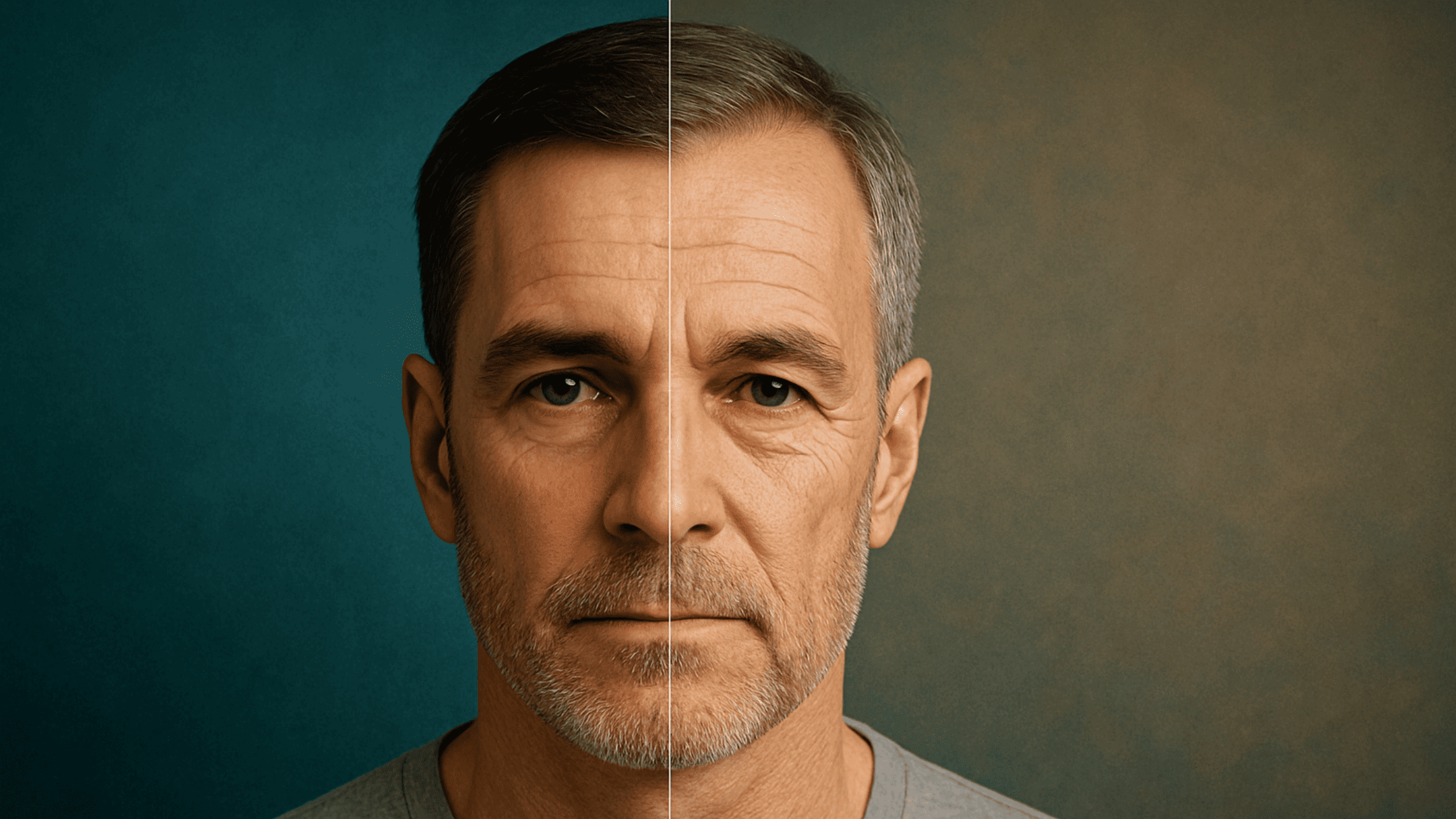
You Know That Feeling When Your Body Just Won’t Bounce Back?
It hits you on a Tuesday morning. You used to recover from that weekend hike in a day. Now it’s been three days and your legs still feel like concrete.
Or maybe it’s the brain fog that rolls in every afternoon like clockwork. The same mind that used to crush presentations and solve complex problems now struggles to remember where you put your keys.
You’re starting to wonder: Is this just what getting older feels like?
Here’s what’s really happening inside your body: A slow-burning fire is stealing your energy, your sharpness, and your recovery. Most guys can’t see it, can’t feel it directly, but it’s there—working 24/7 to age you faster than you should.
It’s called chronic inflammation. And it’s probably the most important health concept you’ve never fully understood.
This isn’t about occasional soreness or the redness around a cut. This is about a systemic inflammatory response that’s supposed to protect you but instead becomes your worst enemy.
The reality? Most men over 35 are walking around with chronic inflammation levels that are literally accelerating their aging process. They blame genetics, stress, or just “getting older” for feeling like crap.
But here’s the thing: Chronic inflammation is largely within your control. Once you understand how to manage it, you can literally slow down your biological clock.
Why Inflammation Is Silently Stealing Your Best Years
The Hidden Killer of Energy, Recovery, and Performance
Think of inflammation like a car alarm that won’t turn off.
Your immune system is designed to respond to threats—infections, injuries, toxins. It sends out inflammatory signals to deal with the problem, then shuts down when the job is done.
But what happens when the alarm never stops?
Chronic inflammation is like having your immune system stuck in emergency mode 24/7. Instead of protecting you, it starts attacking your own tissues, accelerating aging, and draining your vitality.
The hidden costs of chronic inflammation: • Energy depletion – Your body burns through resources fighting a fire that never goes out • Poor recovery – Muscle repair and adaptation get compromised • Brain fog – Neuroinflammation affects cognitive function and mood • Accelerated aging – Cellular damage accumulates faster than your body can repair it • Increased disease risk – Higher chance of heart disease, diabetes, and cancer
Want to understand exactly how chronic inflammation is sabotaging your vitality and what it’s costing you daily? Dive deep into our complete guide on chronic inflammation.
Acute vs. Chronic Inflammation: When Protection Becomes Poison

Not all inflammation is bad. In fact, acute inflammation is essential for survival.
Acute inflammation (the good kind): • Triggered by injury or infection • Short-term response lasting hours to days • Localized to the affected area • Helps healing by bringing immune cells and nutrients • Shuts off when the job is done
Chronic inflammation (the aging accelerator): • Triggered by lifestyle factors – Poor diet, stress, lack of sleep • Long-term response lasting months to years • Systemic – Affects your entire body • Damages healthy tissue instead of healing • Never shuts off without intervention
Here’s what makes chronic inflammation so insidious: You can’t feel it directly. Unlike a sprained ankle or a headache, chronic inflammation operates below the threshold of pain while slowly damaging your health.
The Inflammation-Aging Connection You Need to Understand
How Chronic Inflammation Accelerates Cellular Aging
Scientists have a term for this: “inflammaging.” It’s literally inflammation-driven aging.
Here’s how chronic inflammation ages you faster: • Cellular damage – Inflammatory molecules damage DNA, proteins, and cellular structures • Shortened telomeres – The protective caps on chromosomes get worn down faster • Impaired cellular repair – Your body’s maintenance systems can’t keep up with the damage • Oxidative stress – Inflammation generates free radicals that attack healthy cells • Tissue degradation – Chronic inflammation breaks down muscle, bone, and organ tissue
The scary part? This process accelerates with age. The older you get, the more inflammation you tend to have, and the less capable your body becomes of controlling it.
The Cascade Effect: From Inflamed Cells to Aged Body
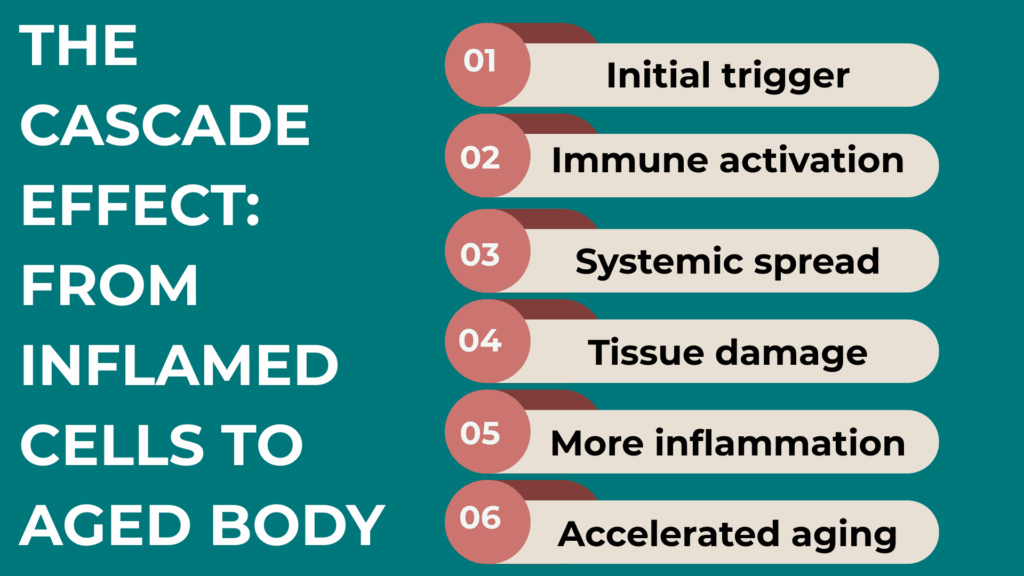
Chronic inflammation doesn’t stay contained. It spreads like wildfire through your entire system.
The inflammation cascade:
- Initial trigger – Poor diet, stress, lack of sleep, environmental toxins
- Immune activation – Your body releases inflammatory molecules
- Systemic spread – Inflammation travels through your bloodstream
- Tissue damage – Healthy cells get caught in the crossfire
- More inflammation – Damaged tissues trigger even more inflammatory responses
- Accelerated aging – The cycle continues, aging you faster each year
This is why addressing inflammation isn’t just about feeling better today. It’s about slowing down your biological clock.
Why Men Over 35 Are Particularly Vulnerable
Several factors make men over 35 especially susceptible to chronic inflammation:
Hormonal changes: • Declining testosterone – Lower T levels are associated with increased inflammation • Increased cortisol – Chronic stress elevates cortisol, which promotes inflammation • Growth hormone decline – Less GH means slower recovery and more inflammatory damage
Lifestyle factors: • Higher stress loads – Career pressure, financial responsibilities, family demands • Poor sleep quality – Most men over 35 don’t get adequate deep sleep • Dietary inflammation – Reliance on processed foods and inflammatory oils • Sedentary behavior – Desk jobs and reduced physical activity • Accumulated damage – Years of inflammatory lifestyle catching up
Signs Your Body Is Fighting a Fire You Can’t See
Physical Red Flags That Scream “Chronic Inflammation”
Your body is constantly sending you signals about inflammation levels. Most guys just don’t know how to read them.
Morning inflammation indicators: • Stiffness upon waking that takes 30+ minutes to work out • Puffy face or hands from fluid retention • Difficulty getting out of bed despite adequate sleep • Immediate need for caffeine to function • Grogginess that persists through the morning
Throughout the day: • Energy crashes at predictable times (usually 2-4 PM) • Brain fog and difficulty concentrating • Mood swings or increased irritability • Cravings for sugar or inflammatory foods • Digestive issues – Bloating, gas, irregular bowel movements
Exercise and recovery: • Longer recovery between workouts • Decreased exercise tolerance despite consistent training • Muscle soreness that lingers for days • Frequent minor injuries or strains • Poor workout performance on days you should feel good
Performance Declines That Point to Inflammatory Damage
Chronic inflammation doesn’t just make you feel bad. It makes you perform worse in every area of life.
Cognitive performance hits: • Memory problems – Names, details, where you put things • Reduced focus – Difficulty maintaining attention on tasks • Slower decision-making – Taking longer to process information • Creative blocks – Less mental flexibility and problem-solving ability • Emotional volatility – Shorter fuse, less patience
Physical performance declines: • Strength plateaus despite consistent training • Endurance drops – Getting winded easier than before • Flexibility loss – Increased tightness and restricted movement • Balance issues – Less stability and coordination • Sexual performance – Reduced libido and function
If you’re experiencing 3 or more of these regularly, chronic inflammation is likely affecting your performance.
How to Know if You’re Inflamed: Testing and Tracking
You don’t have to guess about your inflammation levels. There are specific biomarkers you can test.
Key inflammation biomarkers: • C-Reactive Protein (CRP) – Most common inflammation marker • Erythrocyte Sedimentation Rate (ESR) – How quickly red blood cells settle • Interleukin-6 (IL-6) – Pro-inflammatory cytokine • Tumor Necrosis Factor-alpha (TNF-α) – Another inflammatory cytokine • Fibrinogen – Protein involved in clotting and inflammation
Optimal ranges for longevity: • CRP: Less than 1.0 mg/L (not just “normal”) • ESR: Less than 10 mm/hr for men • Fibrinogen: 200-400 mg/dL • Other markers: Work with your doctor to interpret advanced panels
Want to know exactly which tests to ask for and how to interpret your inflammation markers? Get our complete guide to inflammation testing and tracking.
Your Complete Anti-Inflammatory Action Plan
The Anti-Inflammatory Diet That Actually Works
Forget extreme diets and complicated elimination protocols. The most powerful anti-inflammatory approach is surprisingly simple.
The foundation: Eat more of these inflammation-fighting foods: • Fatty fish – Salmon, mackerel, sardines 2-3x per week for omega-3s • Colorful vegetables – The more variety, the better • Berries – Blueberries, blackberries, cherries for antioxidants • Leafy greens – Spinach, kale, arugula for polyphenols • Nuts and seeds – Walnuts, flaxseeds, chia seeds for healthy fats • Olive oil – Extra virgin, cold-pressed for cooking and dressing • Herbs and spices – Turmeric, ginger, garlic for potent anti-inflammatory compounds
Equally important: Eat less of these inflammation promoters: • Processed meats – Bacon, sausage, deli meats with nitrates • Refined carbohydrates – White bread, pasta, sugary snacks • Vegetable oils – Corn, soy, sunflower oils high in omega-6 • Added sugars – Especially high-fructose corn syrup • Ultra-processed foods – Anything with more than 5 ingredients • Trans fats – Partially hydrogenated oils (mostly banned but still lurking)
Pro tip: Focus on adding anti-inflammatory foods before eliminating everything. Crowding out bad foods with good ones is more sustainable than restriction-focused approaches.
For a complete anti-inflammatory meal plan that doesn’t require giving up everything you enjoy, check out our practical anti-inflammatory diet guide.
Sleep, Stress, and the Inflammation Triangle
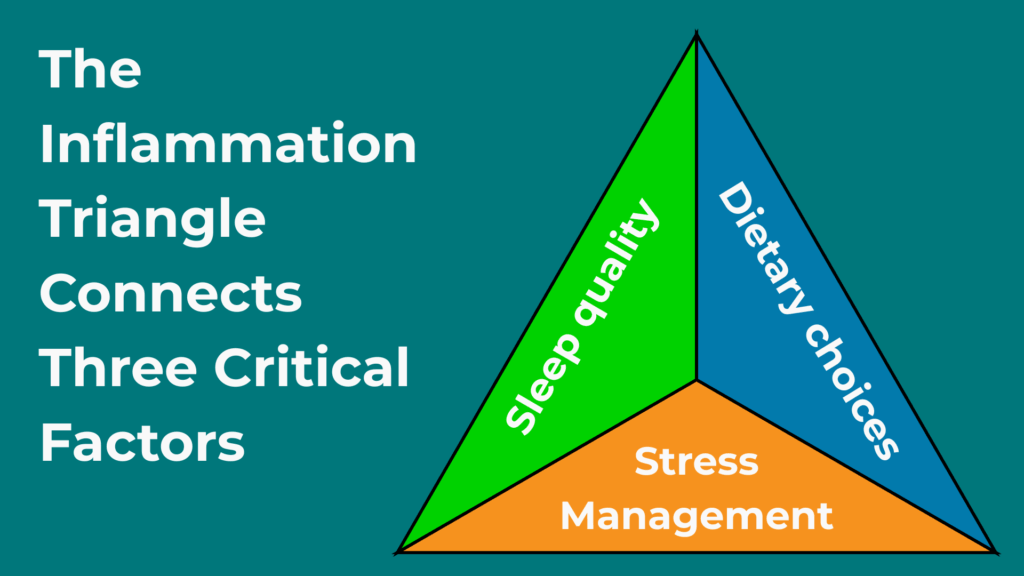
Here’s what most guys miss: Diet is only one piece of the anti-inflammatory puzzle.
The inflammation triangle connects three critical factors:
- Sleep quality
- Stress management
- Dietary choices
Mess up any one of these, and the other two suffer. Master all three, and you’ve got a powerful anti-inflammatory system.
Sleep and inflammation: • Poor sleep increases inflammatory markers within 24 hours [LINK NEEDED: Research on sleep deprivation and inflammation] • Deep sleep is when your body produces anti-inflammatory compounds • Consistency matters more than just duration • Sleep debt creates a chronic inflammatory state
Stress and inflammation: • Chronic stress elevates cortisol, which promotes inflammation • Acute stress can be anti-inflammatory when followed by recovery • Psychological stress has the same inflammatory impact as physical stress • Social connection is one of the most powerful anti-inflammatory interventions
The interconnection: • Poor sleep makes you more stress-reactive • High stress disrupts sleep quality • Both make you crave inflammatory foods • Good nutrition supports better sleep and stress resilience
Want to master the complete inflammation triangle? Dive into our comprehensive guide on sleep, stress, and inflammation.
Movement and Recovery Strategies That Cool the Fire
Exercise is a double-edged sword when it comes to inflammation.
Exercise creates short-term inflammation but long-term anti-inflammatory benefits.
Anti-inflammatory exercise strategies: • Moderate intensity – 60-70% of max heart rate for most sessions • Adequate recovery – 48-72 hours between intense sessions • Mix modalities – Strength, cardio, mobility, and recovery work • Progressive overload – Gradual increases to avoid excessive inflammation • Listen to your body – Some days require lighter activity
Movement patterns that fight inflammation: • Walking – Gentle, consistent, anti-inflammatory • Swimming – Low-impact, full-body movement • Yoga – Combines movement, breathwork, and stress reduction • Strength training – Builds muscle while improving inflammatory markers • Mobility work – Reduces stiffness and promotes circulation
Recovery strategies that reduce inflammation: • Active recovery – Light movement on rest days • Cold therapy – Ice baths or cold showers to reduce inflammation • Heat therapy – Saunas to promote anti-inflammatory responses • Massage – Improves circulation and reduces inflammatory markers • Breathwork – Activates parasympathetic nervous system
When and How to Use Anti-Inflammatory Supplements
Evidence-Based Supplements for Inflammation Control
Supplements can support your anti-inflammatory efforts, but they’re not magic bullets.
Tier 1: Strong evidence for inflammation reduction • Omega-3 EPA/DHA – 2-3g daily of combined EPA and DHA • Curcumin – 500-1000mg daily with black pepper (piperine) for absorption • Vitamin D – Optimize blood levels to 50-80 ng/mL • Magnesium – 400-600mg daily, preferably glycinate form • Green tea extract – EGCG content equivalent to 3-4 cups of green tea
Tier 2: Promising but limited evidence • Boswellia – Traditional anti-inflammatory herb • Quercetin – Flavonoid with anti-inflammatory properties • Resveratrol – Polyphenol from grapes and berries • Ginger extract – Standardized gingerol content • Tart cherry extract – Natural anti-inflammatory and recovery aid
What to avoid: • Proprietary blends with undisclosed amounts • “Miracle” anti-inflammatory formulas with no research • High-dose single antioxidants – Can become pro-inflammatory • Cheap, non-standardized extracts – Poor bioavailability
Natural vs. Synthetic: What Actually Moves the Needle
The supplement industry loves to overcomplicate anti-inflammatory nutrition.
What actually works: • High-quality omega-3s from fish oil or algae • Bioavailable curcumin with absorption enhancers • Vitamin D3 (not D2) with vitamin K2 • Chelated minerals like magnesium glycinate • Standardized herbal extracts with known active compounds
What’s mostly marketing: • “Natural” vs. “synthetic” claims without context • Exotic super-ingredients with no human research • Mega-dose formulas that exceed what your body can use • Kitchen sink approaches with 20+ ingredients
Timing, Dosing, and Realistic Expectations
Anti-inflammatory supplements work best when taken consistently over time.
Optimal timing: • Omega-3s – With meals to improve absorption and reduce burping • Curcumin – With meals containing fat and black pepper • Vitamin D – With fat-containing meals for absorption • Magnesium – Evening for relaxation benefits • Green tea extract – Between meals to avoid iron interference
Realistic timelines: • 2-4 weeks – Initial improvements in subjective symptoms • 6-8 weeks – Measurable changes in inflammatory biomarkers • 3-6 months – Significant improvements in chronic inflammation • Long-term – Sustained benefits require consistent use
For detailed guidance on choosing, timing, and using anti-inflammatory supplements effectively, explore our comprehensive supplement guide.
Building Your 90-Day Inflammation Reset
Month 1: Foundation and Assessment
Focus: Understanding your baseline and building sustainable habits
Week 1-2: Assessment and baseline • Get blood work – CRP, ESR, complete metabolic panel • Track symptoms – Energy, mood, sleep quality, exercise recovery • Food diary – Identify inflammatory triggers in your current diet • Sleep analysis – Use a tracker or journal to assess sleep quality
Week 3-4: Foundation building • Add anti-inflammatory foods – Start with one new food per day • Eliminate obvious triggers – Processed foods, excess sugar, inflammatory oils • Establish sleep routine – Consistent bedtime and wake time • Begin stress management – 10 minutes daily of meditation, breathing, or nature time
Month 2-3: Implementation and Optimization
Focus: Deepening your anti-inflammatory practices
Month 2 priorities: • Refine your diet – 80% anti-inflammatory foods, 20% flexibility • Optimize sleep environment – Cool, dark, quiet bedroom • Increase movement – Daily walks plus 3-4 structured exercise sessions • Add targeted supplements – Start with omega-3s and vitamin D
Month 3 priorities: • Advanced stress management – Longer meditation sessions, stress tracking • Exercise optimization – Balance intensity with adequate recovery • Social connection – Prioritize relationships and community • Fine-tune supplements – Add curcumin, magnesium based on response
Long-Term: Maintaining Low Inflammation for Life
Focus: Sustainable practices that become second nature
Lifestyle integration: • Make anti-inflammatory eating your default, not a diet • Prioritize sleep as much as you prioritize work • Build stress resilience through regular practice • Stay active in ways you enjoy long-term
Monitoring and adjustment: • Annual blood work – Track CRP and other inflammatory markers • Quarterly assessments – How do you feel compared to baseline? • Lifestyle audits – What’s working? What needs adjustment? • Professional support – Work with healthcare providers who understand functional medicine
The Bottom Line
Here’s what this all comes down to: Chronic inflammation is stealing years from your life and life from your years.
Every day you ignore it is another day it’s aging you faster than you should, draining your energy, and robbing you of the performance you’re capable of.
But here’s the empowering truth: Inflammation is largely within your control.
When you master inflammation management, everything else gets better. Your energy stabilizes. Your brain clears. Your body recovers faster. You start feeling like the man you want to be instead of the man you’re afraid you’re becoming.
The choice is yours: • Keep accepting fatigue, brain fog, and poor recovery as “normal aging” • Continue living with chronic inflammation because you don’t know how to address it • Keep wondering why you feel older than you should
Or… • Start treating inflammation as the serious threat to your longevity that it is • Implement the strategies that actually move the needle on inflammation • Experience what it feels like to have your energy, sharpness, and vitality back
Your next steps: • Assess your inflammation risk – Are you experiencing the warning signs? • Get baseline testing – Know your CRP and other inflammatory markers • Choose one area to optimize first – Diet, sleep, stress management, or movement • Track your progress – Inflammation improvements are noticeable within 2-4 weeks • Build systematically – Add new strategies once current ones become habits
Your body has been sending you signals about inflammation for months or years. Isn’t it time you started listening?
For detailed guidance on every aspect of inflammation management, explore our complete anti-inflammatory optimization series.
Frequently Asked Questions About Inflammation and Aging
How long does it take to reduce chronic inflammation naturally?
Most people notice improvements within 2-4 weeks, but significant changes take 2-3 months of consistent effort.
Timeline expectations: • Week 1-2: Improved energy and mood with dietary changes • Week 3-4: Better sleep quality and reduced morning stiffness • Month 2: Measurable improvements in inflammatory biomarkers • Month 3: Significant changes in exercise recovery and cognitive function • Month 6+: Long-term improvements in aging biomarkers and disease risk
Factors that speed up improvement: • Starting with the biggest triggers first (diet and sleep) • Addressing multiple factors simultaneously rather than one at a time • Consistency with anti-inflammatory practices • Individual baseline – Higher inflammation often improves faster initially
What slows progress: • Inconsistent implementation of anti-inflammatory strategies • Ongoing major stressors that counteract your efforts • Underlying health conditions that promote inflammation • Medication interactions that affect inflammatory pathways
Can you completely eliminate inflammation from your body?
No, and you wouldn’t want to. Some inflammation is necessary for health and survival.
The goal is controlling chronic, systemic inflammation while preserving healthy acute inflammatory responses.
Types of inflammation you need: • Acute immune responses to infections and injuries • Exercise-induced inflammation that promotes adaptation • Tissue repair processes that require temporary inflammation • Immune surveillance that prevents cancer and other diseases
Types of inflammation to reduce: • Chronic, low-grade systemic inflammation from lifestyle factors • Excessive inflammatory responses that damage healthy tissue • Persistent inflammation that doesn’t resolve naturally • Age-related inflammaging that accelerates aging
The inflammation balance: • Optimize your body’s natural resolution of inflammation • Support healthy acute inflammatory responses • Reduce chronic inflammatory triggers • Enhance recovery from necessary inflammatory responses
What’s the single most important thing you can do to reduce inflammation?
If you could only change one thing, focus on sleep quality.
Why sleep trumps everything else: • Poor sleep increases inflammatory markers within 24 hours • Deep sleep is when your body produces anti-inflammatory compounds • Sleep affects every other anti-inflammatory strategy (stress, exercise, food choices) • Sleep debt creates a chronic inflammatory state that’s hard to overcome
Sleep optimization priorities: • Consistent schedule – Same bedtime and wake time every day • 7-9 hours of actual sleep, not just time in bed • Cool environment – 65-68°F for optimal deep sleep • Dark room – Blackout curtains or eye masks • No screens 1-2 hours before bedtime
Runner-up strategies: • Anti-inflammatory diet – Especially reducing processed foods and added sugars • Stress management – Daily practice of relaxation techniques • Regular movement – Balanced exercise with adequate recovery
Do anti-inflammatory medications help or hurt in the long run?
Anti-inflammatory medications can be helpful short-term but problematic for long-term use.
NSAIDs (ibuprofen, aspirin, naproxen): • Short-term benefits – Reduce pain and acute inflammation • Long-term risks – Stomach ulcers, kidney damage, cardiovascular risk • Interference with natural healing processes • Rebound inflammation when stopped after chronic use
Prescription anti-inflammatories: • Corticosteroids – Powerful but significant side effects with long-term use • DMARDs – Disease-modifying drugs for autoimmune conditions • Biologics – Newer targeted therapies with specific applications
The natural approach advantage: • Addresses root causes rather than just symptoms • Supports your body’s natural anti-inflammatory systems • No significant side effects when done properly • Improves overall health rather than just reducing inflammation
When medications make sense: • Acute injuries or severe inflammatory episodes • Autoimmune conditions requiring medical management • Bridge therapy while implementing lifestyle changes • Medical supervision for serious inflammatory diseases
How do you know if your anti-inflammatory efforts are working?
Track both subjective symptoms and objective biomarkers for the complete picture.
Subjective improvements you should notice: • Energy levels – More stable throughout the day • Sleep quality – Falling asleep easier, waking more refreshed • Exercise recovery – Less soreness, faster bounce-back • Mental clarity – Reduced brain fog, better focus • Mood stability – Less irritability, better stress tolerance • Digestive health – Less bloating, more regular bowel movements
Objective biomarkers to track: • C-Reactive Protein (CRP) – Should decrease toward <1.0 mg/L • Resting heart rate – Often decreases with reduced inflammation • Blood pressure – May improve with inflammatory reduction • Body composition – Less belly fat, better muscle mass • HbA1c – Better blood sugar control
Timeline for tracking: • Daily symptoms – Energy, mood, sleep quality • Weekly assessments – Exercise performance, stress tolerance • Monthly measures – Weight, body fat, resting heart rate • Quarterly blood work – CRP and other inflammatory markers
Is some inflammation actually good for you?
Absolutely. Acute inflammation is essential for health, adaptation, and survival.
Beneficial types of inflammation: • Exercise-induced inflammation – Triggers muscle growth and cardiovascular adaptation • Immune responses – Fight infections and eliminate damaged cells • Wound healing – Essential for tissue repair and regeneration • Hormetic stress – Small amounts of stress that make you stronger
The concept of hormesis: • Brief, controlled inflammatory stress can strengthen your anti-inflammatory systems • Exercise, cold exposure, intermittent fasting create beneficial short-term inflammation • Recovery and adaptation happen during the anti-inflammatory response that follows • The dose makes the poison – Too little or too much inflammation is problematic
How to promote healthy inflammation: • Regular exercise with adequate recovery • Controlled stress exposure like cold therapy or challenging workouts • Intermittent fasting to promote cellular cleanup • Quality sleep to support the natural inflammatory cycle
The goal is not to eliminate all inflammation but to optimize your inflammatory responses for health and longevity.
Disclaimer: This content is for informational purposes only and is not a substitute for professional medical advice, diagnosis, or treatment. Always seek the advice of your physician or other qualified health provider with any questions you may have regarding a medical condition.
Read More Blogs on Inflammation & Aging Defense


