

Table of Contents
You Know That 3 PM Wall You Keep Hitting

You know that moment when your brain feels like it’s running through molasses and your body wants to crawl under your desk for a nap?
It’s 3 PM on a Wednesday. You’ve got three more hours of work, a dinner to get through, and maybe you promised to help your kid with homework. But all you can think about is how much effort it takes just to keep your eyes open.
Meanwhile, that colleague who’s five years older than you seems to have the energy of someone half your age. What gives?
Here’s what nobody talks about: energy isn’t just about being tired. It’s about feeling like a shadow of who you used to be.
Remember when you could pull an all-nighter, hit the gym the next morning, and still have enough left in the tank for weekend plans? Now you need a recovery day from your recovery day.
But here’s the thing—this isn’t inevitable. The energy drain you’re experiencing isn’t just “getting older.” It’s your body sending you a message that your current approach isn’t working anymore.
The cost of ignoring this goes beyond feeling tired.
The good news? Your energy systems are incredibly responsive when you understand how to work with them rather than against them.
What Real Energy Optimization Looks Like for Men
Most guys think energy management is about drinking more coffee and getting more sleep.
That’s like thinking car performance is only about gas and oil changes. You’re missing about 90% of the equation.
Real energy optimization is about building four interconnected systems that work together:
Beyond Caffeine and Quick Fixes
Let’s address the elephant in the room: you’re probably using caffeine like a bandaid on a broken system.
Signs you’re in the caffeine trap:
- You need coffee to feel human in the morning
- You experience afternoon crashes despite stimulants
- You rely on energy drinks to power through workouts
- You can’t focus without caffeine, but can’t relax with it
- Your sleep quality has declined but your caffeine intake has increased
Here’s what’s really happening: caffeine is borrowing energy from your future self. It’s not creating energy—it’s masking your body’s signals that something deeper needs attention.
The Four Pillars of Male Energy Systems

Think of energy like a high-performance engine. You need four systems operating optimally:
1. Cellular Energy (Your Power Plant) Your mitochondria produce the actual energy currency your body uses. When these cellular powerhouses are optimized, everything else becomes easier.
2. Mental Energy (Your Processor) Your brain consumes about 20% of your total energy. Studies show that mental fatigue can be as depleting as physical exhaustion, especially for men in demanding careers. Prolonged cognitive activity can impair cognitive performance and increase the perception of effort during physical tasks.
3. Physical Energy (Your Engine) Your cardiovascular system, muscle efficiency, and movement patterns determine how well you can sustain physical output throughout the day.
4. Recovery Energy (Your Repair Shop) Sleep and stress management systems that restore and rebuild your energy capacity for the next day.
When all four systems are optimized, you don’t just feel less tired—you feel unstoppable.
Why Your Energy Tank Keeps Running Empty
The brutal reality? Modern life is designed to drain men’s energy faster than we can replenish it.
You’re dealing with stressors our bodies weren’t designed to handle, using energy management strategies that worked when you were 25, and expecting the same results.
The Hidden Energy Drains Most Men Ignore
Stress energy leak:
- Chronic work pressure keeping your nervous system in overdrive
- Financial anxiety creating persistent background tension
- Relationship conflicts draining emotional energy
- Information overload from constant connectivity
Physical energy leak:
- Sitting for 8+ hours disrupting circulation and metabolism
- Poor posture creating muscle tension and fatigue
- Shallow breathing reducing oxygen efficiency
- Dehydration affecting cellular function
Mental energy leak:
- Decision fatigue from too many daily choices
- Multitasking reducing cognitive efficiency
- Negative thought patterns creating mental drag
- Lack of meaningful breaks allowing mental recovery
How Age Changes Your Energy Game After 35
Let’s be honest about what’s happening in your body:
Research indicates that men experience several energy-affecting changes after 35:
- Testosterone decline of 1-2% per year affects energy, motivation, and recovery
- Mitochondrial efficiency decreases reducing cellular energy production
- Sleep architecture changes leading to less restorative rest
- Stress recovery slows making it harder to bounce back from challenges
- Muscle mass naturally decreases reducing metabolic efficiency
This isn’t a death sentence—it’s a call to upgrade your energy management strategy.
The Performance Pressure Energy Trap
Here’s the paradox: the more successful you become, the more energy demands increase, but the less time you have for energy maintenance.
The trap looks like:
- Taking on more responsibility without scaling energy management
- Using stimulants to maintain performance instead of addressing root causes
- Sacrificing recovery time to meet professional demands
- Feeling guilty about prioritizing energy management as “selfish”
- Pushing through fatigue until small problems become major breakdowns
The way out: treating energy management as a professional skill, not a personal luxury.
Cellular Energy: Your Body’s Power Plant
Your mitochondria are literally where energy is made in your body. These tiny cellular powerhouses convert nutrients into ATP—the energy currency that powers everything from your heartbeat to your ability to focus during meetings.
Think of mitochondria like the engine in your car. You can have the best fuel, perfect driving conditions, and regular maintenance, but if your engine is running inefficiently, nothing else matters.
Understanding Your Mitochondrial Engine
Research shows that mitochondrial function naturally declines with age, but this decline can be significantly slowed or even reversed with the right interventions.
Signs your cellular energy needs attention:
- Fatigue that doesn’t improve with rest
- Difficulty recovering from exercise or stress
- Brain fog despite adequate sleep
- Feeling older than your chronological age
- Reduced stamina for activities you used to enjoy
Fueling Cellular Performance Naturally
Mitochondrial optimization strategies:
Nutritional support:
- Coenzyme Q10 – supports cellular energy production
- PQQ (Pyrroloquinoline quinone) – promotes new mitochondria growth
- Alpha-lipoic acid – protects mitochondria from oxidative stress
- Magnesium – essential for ATP production
- B-vitamins – cofactors in energy metabolism
Lifestyle interventions:
- Cold exposure – stimulates mitochondrial biogenesis
- Intermittent fasting – promotes cellular autophagy and renewal
- High-intensity interval training – forces mitochondrial adaptation
- Red light therapy – may enhance cellular energy production
- Stress management – reduces oxidative damage to mitochondria
The Cellular Energy Optimization Protocol
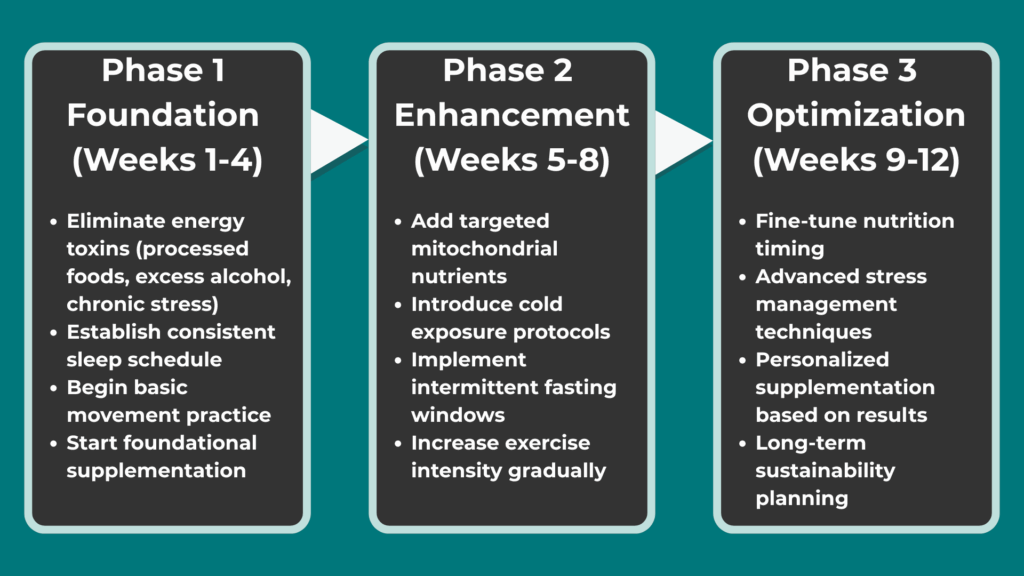
Phase 1: Foundation (Weeks 1-4)
- Eliminate energy toxins (processed foods, excess alcohol, chronic stress)
- Establish consistent sleep schedule
- Begin basic movement practice
- Start foundational supplementation
Phase 2: Enhancement (Weeks 5-8)
- Add targeted mitochondrial nutrients
- Introduce cold exposure protocols
- Implement intermittent fasting windows
- Increase exercise intensity gradually
Phase 3: Optimization (Weeks 9-12)
- Fine-tune nutrition timing
- Advanced stress management techniques
- Personalized supplementation based on results
- Long-term sustainability planning
Want to dive deep into cellular energy optimization? [Cellular Energy 101: How Your Mitochondria Power Every Part of Your Life]
Mental Energy and Cognitive Performance
Your brain is an energy hog. It uses about 20% of your total daily energy, and when it’s not running efficiently, everything else suffers.
Mental fatigue isn’t just “being tired”—it’s cognitive inefficiency that impacts every decision, interaction, and performance throughout your day.
Brain Fog vs. Mental Clarity

Brain fog symptoms men often dismiss:
- Taking longer to process information that used to be automatic
- Difficulty finding words during conversations or presentations
- Reduced creativity and problem-solving ability
- Feeling mentally “heavy” or slow
- Increased errors in tasks requiring attention to detail
What mental clarity actually feels like:
- Sharp focus that can be sustained for hours
- Quick recall of information and names
- Creative solutions appearing naturally
- Mental energy that matches physical energy
- Cognitive resilience under pressure
Focus and Alertness Throughout the Day
Studies on cognitive performance patterns show that men typically have peak mental energy in late morning and early evening, with natural dips in early afternoon.
Working with your natural rhythm instead of against it:

Peak performance hours (9-11 AM):
- Schedule your most cognitively demanding tasks
- Make important decisions
- Tackle creative projects
- Handle complex problem-solving
Energy maintenance hours (11 AM-3 PM):
- Focus on execution and routine tasks
- Take strategic breaks every 90 minutes
- Use movement to maintain alertness
- Manage glucose levels with strategic nutrition
Recovery hours (3-5 PM):
- Handle administrative tasks
- Take a brief rest or meditation break
- Engage in light physical activity
- Prepare for evening energy renewal
Protecting Your Cognitive Energy Reserves
Mental energy conservation strategies:
Decision fatigue prevention:
- Automate routine decisions (meals, clothing, morning routine)
- Batch similar decisions together
- Delegate or eliminate non-essential choices
- Make important decisions during peak energy hours
Cognitive load management:
- Single-task during focused work periods
- Use external systems for memory (lists, calendars, notes)
- Minimize context switching between different types of tasks
- Create “cognitive rest” periods throughout the day
Attention optimization:
- Practice sustained attention through meditation or focused breathing
- Eliminate unnecessary notifications and distractions
- Create physical environments that support concentration
- Use the Pomodoro Technique or similar time-blocking methods
Ready to master mental energy management for sustained cognitive performance? [Mental Energy for Men: How to Stay Sharp, Calm, and Focused All Day]
Physical Energy and Training Intelligence
Here’s where most men get it backwards: they think more exercise automatically equals more energy.
Sometimes it does. But often, your workout routine is actually draining your daily energy reserves instead of building them.
Why Your Workouts Might Be Draining You
Signs your training is depleting rather than building energy:
- You’re exhausted for hours after workouts
- You need caffeine to get through training sessions
- Your sleep quality gets worse on workout days
- You’re constantly sore or feeling beaten up
- Your motivation to exercise is decreasing over time
The energy drain culprits:
- Overtraining – not allowing adequate recovery between sessions
- Wrong intensity – too much high-intensity work without aerobic base
- Poor timing – intense workouts too close to bedtime
- Inadequate nutrition – training in depleted states
- Stress stacking – adding exercise stress to already high life stress
Training for Energy vs. Training for Exhaustion
Energy-building exercise principles:
80/20 intensity distribution:
- 80% of training at conversational pace (you can talk while exercising)
- 20% at higher intensities for adaptation and challenge
- This matches how elite endurance athletes train for sustainable performance
Movement variability:
- Include strength, flexibility, and cardiovascular components
- Change movement patterns regularly to prevent overuse
- Add playful activities that don’t feel like “exercise”
- Practice functional movements that support daily activities
Recovery integration:
- Plan rest days as actively as workout days
- Include mobility and stretching as part of training
- Monitor heart rate variability to gauge recovery needs
- Adjust intensity based on life stress levels
Building Sustainable Physical Vitality
The energy-first workout approach:
Morning activation (10-15 minutes):
- Dynamic movement to wake up your nervous system
- Light cardio to increase circulation
- Mobility work to address overnight stiffness
- Breathing exercises to oxygenate your system
Strength maintenance (20-30 minutes, 2-3x/week):
- Compound movements that work multiple muscle groups
- Progressive overload without excessive fatigue
- Focus on movement quality over maximum weight
- Include functional patterns for daily life
Aerobic base building (30-45 minutes, 2-3x/week):
- Low-intensity cardio that improves mitochondrial function
- Activities you can sustain while holding a conversation
- Outdoor options for additional mental health benefits
- Variety to prevent boredom and overuse
Need a complete system for training that builds rather than drains your energy? [Train for Energy, Not Just Exhaustion: Smarter Workouts That Fuel You, Not Drain You]
Sleep: Your Ultimate Energy Recovery System
Sleep isn’t just rest—it’s when your body performs critical maintenance that determines your energy levels for the entire next day.
Poor sleep doesn’t just make you tired; it breaks down every other energy system you’re trying to build.
The Sleep-Energy Connection Men Miss
Research on sleep and energy metabolism shows that even one night of poor sleep can:
- Reduce glucose metabolism by up to 40%
- Decrease testosterone production by 10-15%
- Impair decision-making equivalent to being legally drunk
- Increase stress hormones that drain cellular energy
- Reduce physical performance and recovery capacity
But here’s what most men don’t realize: it’s not just about hours in bed—it’s about sleep quality and architecture.
Optimizing Recovery for Maximum Energy
Sleep quality indicators that actually matter:
- Time to fall asleep (should be 10-20 minutes)
- Number of times you wake up during the night
- How refreshed you feel upon waking
- Consistent wake time regardless of bedtime
- Dreams you can remember (indicating REM sleep)
Sleep architecture optimization:
- Deep sleep – physical recovery and growth hormone release
- REM sleep – mental recovery and memory consolidation
- Sleep cycles – 90-minute cycles that should complete naturally
- Sleep efficiency – percentage of time in bed actually sleeping
Sleep Hygiene for Peak Performance
The energy-optimized sleep protocol:
2-3 hours before bed:
- Stop eating to allow digestion to complete
- Finish intense physical activity
- Begin wind-down routine with dimmed lights
- Complete work-related tasks and decision-making
1 hour before bed:
- No screens or use blue light blocking glasses
- Cool down bedroom temperature to 65-68°F
- Practice relaxation techniques (reading, stretching, meditation)
- Prepare everything needed for the next morning
Sleep environment optimization:
- Complete darkness or blackout curtains
- White noise or earplugs to minimize disruptions
- Comfortable mattress and pillows
- Remove electronic devices from bedroom
- Keep bedroom cool and well-ventilated
Morning energy activation:
- Expose yourself to bright light within 30 minutes of waking
- Begin day with movement or light exercise
- Consistent wake time even on weekends
- Avoid snoozing (which fragments sleep cycles)
Ready to transform your sleep into a superpower for daily energy? [Sleep Is Your Superpower: How to Wake Up With More Energy Than You Had at 25]
Daily Energy Management Strategies
Energy management isn’t a one-time fix—it’s a skill that requires intentional daily practice.
Think of it like financial management: you need to budget your energy expenditure, invest in energy-building activities, and avoid energy bankruptcy.
Morning Energy Activation Protocols
The first hour of your day sets the tone for your entire energy trajectory.
Energy activation sequence:
- Hydration – drink 16-20 oz of water immediately upon waking
- Movement – 5-10 minutes of dynamic activity to activate circulation
- Light exposure – get outside or use bright light to trigger cortisol awakening
- Breathing – 2-3 minutes of deep breathing to oxygenate your system
- Intention setting – mental clarity about the day’s priorities
What NOT to do in the first hour:
- Check email or social media immediately
- Rush into high-stress activities
- Consume caffeine before being fully awake
- Skip breakfast or eat processed foods
- Start the day in reactive mode
Sustaining Energy Throughout Your Workday
Energy management during work hours:
Every 90 minutes:
- Take a 5-10 minute break from focused work
- Stand up and move your body
- Look away from screens and focus on distant objects
- Practice deep breathing or brief meditation
- Hydrate with water rather than caffeine
Midday energy maintenance:
- Eat balanced meals that stabilize blood sugar
- Take a 10-15 minute walk outside if possible
- Manage stress through brief mindfulness practices
- Avoid energy-draining conversations or decisions when possible
- Consider a 10-20 minute power nap if circumstances allow
Late afternoon energy preservation:
- Recognize 3-4 PM as a natural energy dip
- Use this time for less demanding tasks
- Avoid making important decisions during energy lows
- Get natural light exposure to combat afternoon sleepiness
- Prepare for evening energy renewal rather than fighting fatigue
Evening Recovery and Next-Day Preparation
Your evening routine determines tomorrow’s energy levels.
Energy recovery protocol:
- Transition ritual – 10-15 minutes to shift from work to personal time
- Stress discharge – physical activity, journaling, or relaxation practices
- Nutrition timing – light, easily digestible dinner 2-3 hours before sleep
- Mental decluttering – plan tomorrow’s priorities to clear mental load
- Physical preparation – prepare everything needed for an efficient morning
Nutrition and Supplementation for Energy
Food is fuel, but most men are running their energy systems on the equivalent of low-grade gasoline.
The goal isn’t perfection—it’s consistency in giving your body the raw materials it needs for optimal energy production.
Eating for Sustained Energy vs. Quick Bursts
Energy-stable eating patterns:
- Protein at every meal – stabilizes blood sugar and supports sustained energy
- Complex carbohydrates – provide steady glucose for brain and muscle function
- Healthy fats – support hormone production and cellular function
- Fiber-rich foods – slow digestion and prevent energy crashes
- Regular meal timing – maintains metabolic consistency
Foods that drain energy:
- Processed foods high in sugar and refined carbohydrates
- Excessive caffeine that disrupts natural energy rhythms
- Alcohol that impairs sleep quality and recovery
- Large meals that divert energy to digestion
- Foods you’re sensitive to that trigger inflammation
Strategic Supplementation for Men Over 35
Evidence-based supplements for energy optimization:
[Research on nutritional deficiencies in men] shows that certain nutrients are commonly deficient and directly impact energy levels:
Foundation supplements:
- Vitamin D3 – supports testosterone and overall energy metabolism
- Magnesium – essential for ATP production and stress management
- B-complex vitamins – cofactors in energy production pathways
- Omega-3 fatty acids – support cellular function and reduce inflammation
Performance supplements:
- Creatine monohydrate – enhances cellular energy availability
- Coenzyme Q10 – supports mitochondrial function
- Rhodiola rosea – adaptogenic herb for stress and fatigue
- Iron (if deficient) – essential for oxygen transport and energy
Timing and dosage matter more than the supplements themselves. Work with a healthcare provider to test for deficiencies and create a personalized protocol.
Hydration and Energy Optimization
Dehydration is one of the most common and easily fixed causes of low energy.
Studies show that even mild dehydration (2% of body weight) can significantly impair both physical and mental performance.
Optimal hydration strategy:
- Upon waking – 16-20 oz to replace overnight losses
- Throughout the day – 8-10 oz every hour during active periods
- During exercise – replace losses based on sweat rate
- Quality matters – filtered water with natural electrolytes when needed
- Monitor indicators – urine color, thirst, and energy levels
Building Your Personal Energy Optimization Plan
Energy optimization isn’t one-size-fits-all. Your plan needs to account for your lifestyle, stress levels, health status, and personal preferences.
Assessment—Where Are Your Energy Leaks?
Energy audit questions:
- What time of day do you typically feel most energetic?
- When do you experience consistent energy crashes?
- How does your energy correlate with sleep quality?
- Which activities or situations drain your energy most?
- What has worked for you in the past for boosting energy?
- How do stress levels affect your daily energy?
Physical assessment:
- Recent blood work (vitamin D, B12, iron, thyroid function)
- Sleep quality and duration patterns
- Exercise frequency and recovery
- Nutrition consistency and meal timing
- Hydration habits throughout the day
Implementation Roadmap for Lasting Results

Phase 1: Foundation Building (Weeks 1-4)
- Establish consistent sleep schedule
- Eliminate obvious energy drains (processed foods, excessive caffeine)
- Begin basic movement practice
- Implement hydration protocol
- Start stress management routine
Phase 2: System Optimization (Weeks 5-8)
- Add targeted supplementation if needed
- Refine exercise for energy building rather than depletion
- Optimize meal timing and composition
- Develop advanced sleep hygiene practices
- Create daily energy management routines
Phase 3: Fine-Tuning (Weeks 9-12)
- Personalize based on what’s working
- Address remaining energy leaks
- Build long-term sustainability practices
- Create backup plans for high-stress periods
- Establish monitoring and adjustment protocols
Tracking Progress and Making Adjustments
Meaningful energy metrics to track:
- Morning energy levels upon waking (1-10 scale)
- Afternoon energy stability (avoiding crashes)
- Exercise performance and recovery
- Sleep quality and duration
- Mental clarity and focus
- Overall life satisfaction and mood
Monthly assessment questions:
- What energy improvements have you noticed?
- Which interventions have had the biggest impact?
- What obstacles have you encountered?
- How has your energy affected other areas of life?
- What adjustments need to be made for the next month?
Frequently Asked Questions About Men’s Energy Optimization
How long does it take to see improvements in natural energy levels?
Most men notice initial improvements within 1-2 weeks of consistent sleep and hydration optimization. More significant changes in cellular energy and overall vitality typically take 4-8 weeks as your body adapts to new routines. Full energy system optimization can take 3-6 months, but the cumulative improvements make the investment worthwhile.
Can energy optimization replace my need for caffeine?
Yes, but gradually. As your natural energy systems strengthen, you’ll likely find you need less caffeine to function optimally. Many men reduce their caffeine intake by 50-75% while maintaining higher baseline energy levels. The key is building sustainable energy rather than eliminating caffeine abruptly, which can cause withdrawal and temporary fatigue.
What’s the difference between being tired and having low energy?
Tiredness is usually temporary and resolves with rest, while low energy is a persistent lack of vitality that doesn’t improve with sleep alone. Low energy often indicates underlying issues with cellular metabolism, stress management, or nutrient deficiencies. If you’re consistently tired despite adequate sleep for more than two weeks, consider a comprehensive energy optimization approach.
Do testosterone levels directly affect daily energy?
Absolutely. Research shows that testosterone levels directly correlate with energy, motivation, and overall vitality. Testosterone supports mitochondrial function, oxygen delivery, and brain chemistry, all of which are crucial for maintaining energy levels.hims.com
However, many factors beyond testosterone affect energy. Optimizing sleep, stress management, and nutrition can naturally support healthy testosterone production while improving energy through multiple pathways. For instance, regular exercise and adequate sleep have been shown to boost testosterone levels and enhance overall energy.
Addressing these lifestyle factors is essential for sustaining energy and well-being.
Are energy supplements necessary for men over 35?
Supplements can be helpful but aren’t always necessary. The most important factors are consistent sleep, stress management, proper nutrition, and regular movement. However, men over 35 often benefit from vitamin D, magnesium, and B-complex vitamins due to common deficiencies. Consider testing for deficiencies before supplementing, and focus on lifestyle factors first.
How does stress impact energy levels in men?
Chronic stress is one of the biggest energy drains for men over 35. Stress hormones like cortisol disrupt sleep, impair digestion, reduce testosterone production, and force your body into energy-conservation mode. Learning to manage stress through exercise, meditation, boundary-setting, and relaxation techniques is often the highest-impact intervention for energy optimization.
Bottom line: Your energy isn’t just about feeling less tired. It’s about reclaiming the vitality, mental sharpness, and physical capability that define how you show up in the world.
The men who thrive in their 40s, 50s, and beyond aren’t the ones with perfect genetics. They’re the ones who understood that energy optimization is a skill that compounds over time.
Your energy affects everything:
- Your performance at work and ability to advance your career
- Your presence and patience with family and friends
- Your motivation to maintain your health and fitness
- Your resilience when life throws challenges your way
- Your capacity to pursue goals and interests that matter to you
Your next steps:
- Start with the foundation: prioritize sleep quality for one week
- Identify your biggest energy leak and address it systematically
- Choose one energy-building practice and commit to it for 30 days
- Track your progress to stay motivated and make adjustments
- Build your energy optimization plan gradually rather than trying to change everything at once
If this resonated with you, remember: every day you delay optimizing your energy systems is another day of operating below your potential. You don’t have to accept declining energy as inevitable. You can build an energy system that supports the life you want to live.
Your future self is counting on the choices you make today. Choose energy. Choose vitality. Choose to show up as the man you’re capable of being.
Disclaimer: This content is for informational purposes only and is not a substitute for professional medical advice, diagnosis, or treatment. Always seek the advice of your physician or other qualified health provider with any questions you may have regarding a medical condition.
Read More Topics on Energy & Performance, Focus & Deep Work Optimization, Cognitive Edge.


